 Skip to content

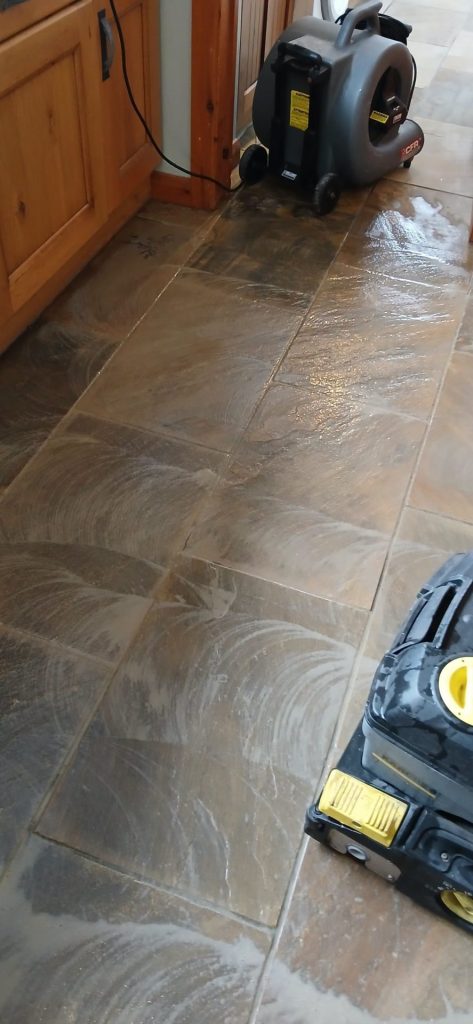
A sandstone floor mid-clean, with the swirl marks from the rotary machine visible.
Indian sandstone is porous, so good cleaning lifts soil from the stone rather than forcing it further in. Start by removing loose grit, then use a suitable stone-safe cleaner at the recommended dilution, agitate gently, and rinse and remove the dirty water thoroughly. Let the stone dry fully before deciding whether it needs sealing.
Why does Indian sandstone go grey, green or patchy?
Sandstone has a naturally textured surface and can absorb moisture and dirt. Grit and everyday soil settle into its little dips, gradually leaving a floor looking dull or grey.
In damp, shaded spots, algae, mould and lichen can take hold. That’s familiar in west Wales, where wet weather, coastal damp and overhanging plants can keep stone surfaces moist for longer. Green growth may lift with suitable cleaning, but black spot lichen is much more stubborn.
Other marks have different causes. Cement or mortar haze may remain after installation; iron in the stone can contribute to rust-coloured marks; and an old sealer can wear unevenly or turn patchy. If you don’t know what a mark is, avoid reaching straight for a strong cleaner: the wrong treatment can make it worse.
How to clean Indian sandstone: step by step
For routine sandstone floor cleaning, take your time and test any cleaner on a small, inconspicuous area first. If you’re dealing with a delicate finish, old coating or a stain that won’t shift, get advice before trying stronger methods.
- Identify the finish. Is the stone natural and riven, sawn, or smooth? The texture and finish affect how it responds to brushing and cleaning.
- Remove loose grit and debris. Sweep with a soft brush first. Grit left underfoot can scratch the surface as you work.
- Pre-wet the stone. This helps stop the cleaner drying too quickly, especially on a warm or draughty day.
- Apply a stone-safe cleaner. Choose one labelled as suitable for sandstone or natural stone, and follow its dilution and dwell-time instructions.
- Agitate gently. Use a soft or suitable nylon brush. For larger indoor floors, a correctly chosen rotary machine may be appropriate; don’t use a wire brush.
- Rinse thoroughly and remove the dirty water. Don’t leave loosened soil sitting in the textured surface or grout. Indoors, use a suitable extraction method; outdoors, follow the product instructions and avoid directing wash water into drains or planting.
- Let the stone dry completely. Damp stone can look darker, so wait before judging the result.
- Consider sealing only if suitable. The floor must be clean and completely dry, and the sealer needs to suit the stone and its existing finish.
- Treat black spot separately. Ordinary floor cleaner and mopping usually won’t remove established lichen; it may need a dedicated treatment and more than one application.

A free sample patch cleaned into a grubby riven stone floor, showing the difference.
What should you avoid when cleaning sandstone?
Sandstone can be damaged by force or unsuitable chemicals, so a cautious approach is sensible.
- Don’t use a very high-pressure washer close to the stone. It can wear away the surface, damage pointing and drive water into the stone. A pressure washer is not a substitute for choosing the right cleaning method.
- Avoid strong acids, including brick and patio acids, unless a specialist confirms that a particular product is suitable and it has been tested. Acid may damage the stone and surrounding planting. Avoid using acid near sealed natural stone paving.
- Never mix bleach with acids or ammonia. Mixing cleaning products can release dangerous gases.
- Don’t use a wire brush or metal scraper. These can scratch the stone or leave marks.
- Don’t seal damp or dirty stone. Avoid applying sealer if rain is forecast or the surface hasn’t dried fully.
If you use any cleaning product, read its label, test it first and keep children and pets away from the work area while you clean and until the surface is safe to use.
What about black spot and algae?
Algae and green film are often more manageable than black spot. A suitable product and gentle brushing can help lift green growth, but it’s important not to scour the stone to try to speed things up.
Black spot lichen is the more difficult problem. It binds to the stone, so a mop or ordinary cleaner often won’t shift it. A dedicated treatment needs time to work, and stubborn marks may need repeat applications over a period of weeks. Test first, follow the product directions and don’t promise yourself an instant result.
For outdoor stone, reducing shade and standing moisture can help slow regrowth: keep drainage clear, improve airflow where possible and cut back overhanging planting. This won’t prevent every spot returning, especially through a wet winter.
Should you seal Indian sandstone?
Sealing is not always necessary, but a suitable penetrating sealer can help reduce absorption and make some future spills easier to manage. It won’t make sandstone stain-proof or stop all biological growth.
For porous stone, a breathable penetrating sealer is generally preferable to a film-forming coating. A surface film can wear, flake or go patchy, and may trap moisture. Only seal stone that is clean and completely dry; allow a run of dry weather if the work is outdoors, and follow the sealer manufacturer’s instructions. If you’re unsure what’s already on the floor, get advice before applying another coating.

An air mover drying a stone floor after cleaning.
Is indoor sandstone different from outdoor paving?
Yes. Indoor sandstone in a kitchen, hallway or conservatory is more likely to have food spills, grease, foot traffic and perhaps an existing sealer. Because it’s inside, cleaning needs to control moisture and remove the dirty water carefully; pressure washing isn’t suitable indoors.
Outdoor paving has to contend with rain, algae, lichen, shade and drainage. Advice about cleaning a patio can be useful, but the right treatment depends on the stone and its condition. Our hard-floor service is for suitable tiled and stone floors, including sandstone and slate; we don’t claim to provide external patio pressure washing.
When is it worth getting help with sandstone cleaning?
Consider professional advice if black spot won’t shift, the affected area is large, a previous sealer has become patchy, or the stone has been marked by acid or aggressive pressure washing. It can also be worth asking for help with a whole indoor floor, or before applying a protective finish when you’re not sure what the stone needs.

A natural stone floor after cleaning and sealing, with its finish restored.
At Pembrokeshire Carpet Cleaners, we assess the floor before recommending a method. Paul is the owner-operator and does every job himself. He has more than eight years’ experience, has completed hundreds of jobs and is trained with Solutions World of Clean, Stone Care Direct and Sharps Training Solutions, as well as in Pesticide Control.
We clean suitable tiled and stone floors, including sandstone, using a deep clean and extraction, with a protective finish or reseal where appropriate. We offer a free sample patch with every hard-floor quote, so you can see how your floor responds before deciding. Our products are safe for children and pets, and our insurance includes both Public Liability and Treatment Risk cover. The latter provides cover in relation to the treatment being carried out.
We’re a family-run Pembrokeshire business, serving homes and holiday lets in Pembroke, Pembroke Dock, Haverfordwest, Milford Haven, Tenby, Saundersfoot, Narberth, Fishguard, Kilgetty, Newport, Carmarthen and across the county. The minimum charge is £80. Quotes are free and no-obligation, with no upselling or hidden costs.
Read more about our hard-floor cleaning and restoration or tile and grout cleaning.
Indian sandstone cleaning FAQs
Can I pressure wash Indian sandstone?
Avoid using a very high-pressure washer close to the stone. It can erode the surface, damage pointing and force water into the sandstone. For a floor or paving, choose a suitable cleaning method rather than relying on pressure alone.
How do I get rid of black spot on sandstone?
Black spot is usually lichen and can be difficult to remove. It generally needs a dedicated treatment with time to work; stubborn spots may need repeat applications. Test first and follow the product instructions.
Should I seal Indian sandstone?
A suitable breathable penetrating sealer may help reduce absorption, but it won’t make the stone stain-proof. Seal only when the surface is clean and fully dry, and check that the product is appropriate for the stone and any existing finish.
Is sandstone slippery when wet?
It can be, depending on its finish, surface condition, algae and any coating. Keep the area clean, take care when it’s wet, and don’t apply a sealer unless it’s suitable for the stone and the intended use.
If you’re unsure how to clean your sandstone floor, get in touch for a free, no-obligation quote, or call Paul on 07824 536685 or 01646 824016.