 Skip to content

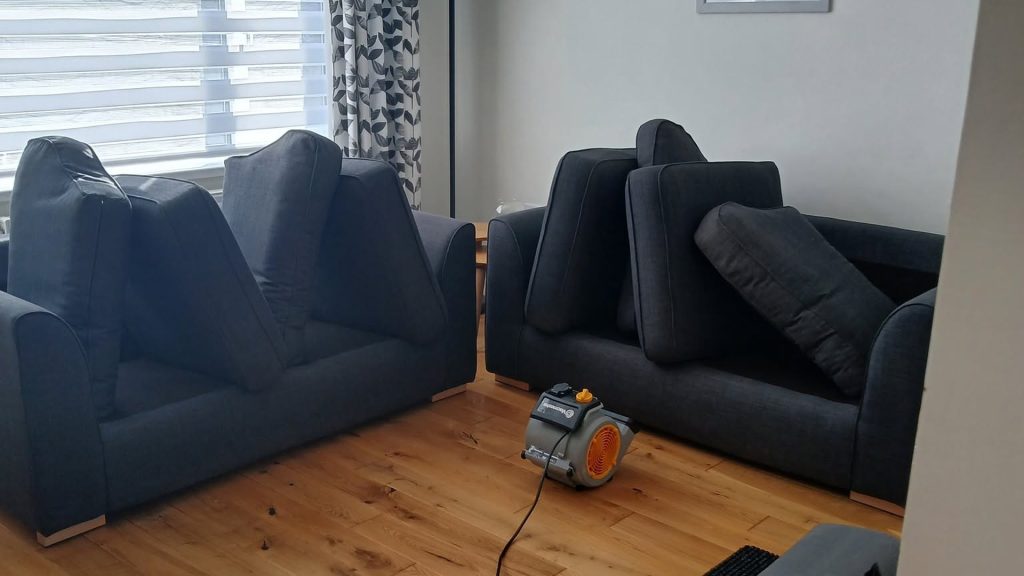
Two grey sofas in a living room with an air mover running between them to dry the fabric after cleaning.
To clean a sofa, check its care label, vacuum the whole sofa, including under the cushions, and test any suitable cleaner on a hidden patch first. Treat stains by blotting, clean the fabric evenly with as little moisture as possible, and dry it quickly with good airflow; never soak it.
It’s tempting to grab whatever’s under the sink when there’s a spill, or when a dog that’s found something interesting on the beach decides the sofa is the best place to dry off. But the wrong product, or too much water, can leave marks, change the feel of the fabric or make a smell worse. Here’s how to clean a fabric sofa without regretting it.
Before you start: how do you find the sofa care label?
Look for a label on the underside of a cushion, beneath the sofa or on its frame. Check the manufacturer’s instructions too, if you still have them. The cleaning code is a useful starting point:
- W means water-based cleaners are suitable.
- S means use a solvent-based upholstery cleaner only; avoid water.
- WS means either water-based or solvent-based products may be suitable.
- X means vacuum or brush only, don’t use liquid cleaners.
The code doesn’t guarantee that a particular product or method will work, so always follow the sofa manufacturer’s directions and patch test first. If the label is missing, unclear or marked X, don’t guess. Contact the manufacturer or ask an upholstery cleaner for advice before using liquids.
Check what the fabric is made from as well. Linen, cotton, wool blends, velvet and chenille can all respond differently to water, brushing and cleaning products. If you’re unsure, or the sofa is delicate or valuable, it’s safest to stop and get professional advice.
How to clean a fabric sofa: what’s the safest step-by-step method?
Only clean at home if the care code allows the method and product you plan to use. Work gently and let the fabric dry between stages if it’s becoming damp.
- Vacuum thoroughly. Use an upholstery attachment across the whole sofa, including seams, crevices, behind and beneath the cushions.
- Remove loose hair and crumbs. A soft upholstery brush or rubber glove can help lift hair without grinding it into the fabric.
- Patch test. Apply a small amount of the suitable product to a hidden area. Leave it for 24 hours, or as the manufacturer directs, and check for colour change, marks or texture changes.
- Treat stains individually. Blot gently with a clean, light-coloured cloth. Don’t rub, and work from the outside of the mark towards the centre.
- Clean evenly. If the label allows, work over the whole section or cushion rather than cleaning just one patch, which may dry a different shade.
- Use minimal moisture. A suitable foam cleaner or lightly damp cloth is generally safer than a soaked sponge. Don’t saturate the fabric.
- Blot out moisture. Press with a dry towel to absorb as much moisture as you can. Only use an extraction machine if it’s suitable for the fabric and care code.
- Dry with airflow. Keep air moving around the sofa and open windows if conditions allow. Avoid direct heat, which can damage or distort some fabrics.
- Finish when fully dry. Gently brush or vacuum the fabric if the maker’s care instructions allow, to lift the pile and reduce stiffness.
For a stubborn mark, avoid layering several products on top of each other. That can leave residue or make the stain harder to treat. If you’re not sure what caused it, our spot and stain removal service can help.
What are the seven sofa-cleaning mistakes to avoid?
- Soaking the sofa. Water can reach the padding, take a long time to dry and leave water marks or musty smells.
- Rubbing a stain. Scrubbing can spread the mark and roughen or fuzz the fabric’s surface. Blot instead.
- Using too much detergent. Leftover product can feel sticky and attract fresh dirt. Use only a suitable cleaner, sparingly.
- Cleaning just one cushion. A newly cleaned section can look a different shade from the rest. Clean evenly when the care code permits.
- Letting the sofa dry without airflow. Damp fabric can smell stale. Blot excess moisture and help air circulate.
- Using a wet vacuum on an S- or X-coded sofa. Water may damage the fabric, and an X code means no liquid cleaning.
- Letting cushions dry out of shape. Prop them up and turn them while they dry, or they can set with a dent or a lean in them.
One more worth saying plainly: don’t reach for bleach or vinegar on coloured fabric. Both can shift dye, and vinegar isn’t kind to every fibre. Those two are behind a good share of the sofas we get called out to rescue.
How do you get smells out of a sofa?
Pet accidents, smoke, damp, sweat and cooking smells can linger. A spray may cover the odour for a while, but it won’t necessarily clean the padding where the smell is held. Pet urine, in particular, can soak through the fabric and into the foam.
Blot a fresh spill promptly, and don’t soak the area or mix cleaning products. If the odour persists, a professional clean with appropriate extraction may be needed; results depend on the fabric, the source and how far the contamination has travelled.
What about leather sofas?
Leather needs products made specifically for leather. Don’t use fabric cleaner or a wet-cleaning method intended for upholstery fabric. Follow the manufacturer’s care instructions, and use a suitable leather conditioner if recommended. If you’re uncertain about the finish or product, ask a specialist first: we can advise whether we’re able to help.
How do you keep a sofa looking good between cleans?
- Vacuum weekly, including around seams and under cushions.
- Plump and rotate cushions if the design allows.
- Blot spills straight away; don’t rub.
- Keep the sofa out of strong, direct sunlight where possible.
- Use a throw on the favourite seat, especially if sandy paws often make their way back from the beach.
- Follow the care label before trying any spot treatment.
Why does a sofa need a professional clean eventually?
Everyday use leaves body oils and sweat on headrests and armrests, while grit can work into fibres and gradually wear them. A surface wipe won’t reach everything in the fabric, and household cleaning can leave residue or uneven patches if it’s not suited to the sofa.
As a general guide, a well-used sofa may benefit from cleaning every 12–18 months, with more frequent attention in busy homes with children or pets. Regular care can help keep an expensive piece of furniture fresh and in use for longer.

Sofa cushions propped up so air can circulate while the fabric dries.
What happens when we clean a sofa?
We assess the fabric and care label before choosing a bespoke process, then patch test and pre-treat where appropriate. Paul carries out every job himself, cleaning by hand with fabric-suitable products and equipment, extracting moisture carefully and using speed driers to help the sofa dry quickly. We prop cushions so air can circulate and they can dry in shape, then share aftercare advice.
We’re a family-run, Pembrokeshire-based business with over eight years’ experience and hundreds of jobs completed. Paul has trained with Solutions World of Clean, Stone Care Direct and Sharps Training Solutions, as well as in Pesticide Control, and has extensive product knowledge for different fabrics. Our products are biodegradable and safe for children, pets and allergy sufferers.
We clean sofas, armchairs, dining chairs, headboards, ottomans and caravans, and some leather furniture. We’re fully insured with Public Liability and Treatment Risk insurance. In plain terms, Treatment Risk insurance provides specific cover relating to the treatment of your furnishings, as well as our Public Liability cover.

A living room with two sofas drying after an upholstery clean.
Sofa cleaning near me: do you cover my area?
If you’re after upholstery or sofa cleaning near you, we cover Pembroke, Pembroke Dock, Haverfordwest, Milford Haven, Tenby, Saundersfoot, Narberth, Fishguard, Kilgetty, Newport, Carmarthen and the villages in between. We also do sofas in holiday lets and caravans around Tenby and Saundersfoot, where a quick, careful turnaround between guests makes all the difference.
There’s an £80 minimum charge. We provide free, no-obligation quotes, with no upselling or hidden costs, and will beat a like-for-like quote. You can find out more about our upholstery cleaning service.

Paul, with the upholstery cleaning hose, after finishing a sofa.
Frequently asked questions about sofa cleaning
Can I use a carpet cleaner on my sofa?
Not automatically. Check the sofa’s care code and the machine and product instructions first. A machine or cleaning solution suitable for a carpet may not be suitable for your sofa fabric.
How long does a sofa take to dry?
It depends on the fabric, how much moisture was used, the room and airflow. With professional equipment and speed driers, sofas are usually dry within hours rather than a full day, but we’ll give you aftercare advice for your particular sofa.
How often should a sofa be cleaned?
A well-used sofa may need a professional clean every 12–18 months. Homes with children or pets may need it more often, depending on use and visible soiling.
Can you get pet smells out of a sofa?
We can assess it and recommend a suitable treatment. If an accident has soaked into the padding, surface cleaning may not be enough, and we can’t promise every odour will come out.
If your sofa needs a refresh, call Paul on 07824 536685 or 01646 824016, or drop us a message through the contact form for a free, no-obligation quote.
We clean carpets as well, so it’s easy to have the sofa and the carpet done in one visit. And if you’d rather know the likely cost before you ring, our honest price guide explains what actually drives it.