 Skip to content

A tiled floor with the grout lines cleaned and restored.
Porcelain is dense and low-porosity, so it’s generally straightforward to clean with warm water and a pH-neutral or mildly alkaline cleaner. If your tiles look dull or smeary, the cause is often detergent residue, dirty mop water or grubby grout rather than the tile itself.
The right approach depends a little on the finish. Here’s how to clean porcelain tile floors carefully, and what to try if a routine mop isn’t shifting the haze.
Why do porcelain tiles go dull or smeary?
Porcelain itself is tough, but cleaning products and everyday grit can still affect how it looks. Common causes include:
- Too much detergent: excess cleaner can dry into a film, leaving streaks or a cloudy look.
- Dirty mop water: a mop can spread loosened soil around rather than pick it up, especially if the water isn’t changed.
- Grubby grout: even when tiles are reasonably clean, dark grout lines can make the whole floor look tired.
- Polish or wax build-up: some “shine” products leave a coating that collects dirt and makes cleaning harder.
- Grit and scratches: sand brought in on shoes or paws can mark the surface over time, particularly if it’s dragged around during mopping.
- Hard-water marks or kitchen grease: dried droplets and cooking film can leave patches that an ordinary mop doesn’t remove.
Matte and textured porcelain can hold soil in their surface texture. Polished and lappato finishes, meanwhile, tend to show streaks and water marks more clearly.

Tile and grout after a professional clean.
How to clean porcelain tiles: step by step
For everyday cleaning, take your time and aim to lift the dirty water off the floor rather than leave it to dry in place.
- Sweep or vacuum first. Pick up loose grit with a soft brush attachment. This helps prevent it being rubbed across the tiles.
- Choose a suitable cleaner. Use a pH-neutral or mildly alkaline tile cleaner, mixed at the dilution on its label. More product won’t necessarily mean a cleaner floor.
- Work in small sections. Use a clean microfibre mop and avoid spreading dirty water from one area to another.
- Don’t flood the floor. Porcelain tolerates water well, but grout, edges and any sealant may not. A damp mop is usually enough.
- Agitate grubby grout separately. A soft brush can help work cleaner into the lines. Don’t use a wire brush or abrasive pad.
- Rinse and remove the dirty water. This is an important step: leftover cleaner or suspended soil can dry back onto the surface. Change the rinse water as it gets dirty.
- Dry with a clean microfibre cloth or let the floor air dry. On polished tiles, drying can help prevent streaks and water spots.
- Buff polished porcelain if needed. Use a clean, dry microfibre cloth to even out any remaining marks.
If you’re trying a new product, test it first in a discreet spot and follow the tile and cleaner manufacturers’ instructions.
What should I avoid when cleaning porcelain?
Avoid abrasive powders and wire brushes, which can dull polished or lappato finishes. Be cautious with acidic cleaners: they may affect cement grout and can damage natural stone beside the tiles. Check the product label and test first rather than assuming a cleaner is suitable for every surface.
Never mix bleach with acids or ammonia. Don’t use wax or oil-based “shine” products unless the tile manufacturer specifically recommends them; coatings can leave a film and may make a floor slippery. Using too much detergent can cause the very dullness you’re trying to remove.
For textured or lappato tiles, check the manufacturer’s care guidance. Their surface can need a different brush or cleaning method from smooth porcelain.
Does matte or polished porcelain need different care?
Yes, the finish makes a difference. Polished and lappato tiles reflect more light, so streaks and dried droplets can stand out; rinse well and buff them dry. Matte finishes often disguise everyday marks better, but dirt can settle into their texture.
Textured and anti-slip tiles may need gentle brushing to loosen soil from the surface. Avoid harsh scrubbing, and make sure dirty rinse water is removed rather than left to dry in the texture.
Why does the grout look worse than the tiles?
Porcelain tiles are generally less absorbent than grout. Grout is more porous, so it can hold soil and discolour more readily. Those dark lines can make clean tiles look dirty by comparison, which is why a thorough tile clean is often really a tile and grout clean.
After cleaning, grout sealing may help reduce staining where it’s suitable for the grout and floor. It isn’t a magic barrier, and it won’t remove existing dirt, so cleaning and proper drying come first. We've also written a separate guide on what actually works when cleaning grout, if the lines are your main problem.
Can I make porcelain tiles shiny again?
If the dullness is residue, careful cleaning and rinsing may improve the appearance. But cleaning can’t reverse scratches or restore a finish that has worn away.
A coating or polish might create temporary shine, but it can build up and attract dirt. Before applying anything, check the tile maker’s advice. Where a floor needs more than routine cleaning, a professional can assess a sample area and explain what’s realistic, without promising that every mark can be removed.
When is a professional porcelain tile clean worthwhile?
It may be worth getting help if you have a large tiled area or whole ground floor, stubborn kitchen grease, textured tiles that are hard to rinse clean, or grout that stays discoloured despite careful cleaning. A professional clean can also suit holiday lets where there’s a tight changeover, or floors where you’re considering a suitable grout seal.

An air mover drying a tiled floor after cleaning.
What do we do when cleaning a porcelain floor?
Paul starts by assessing the tile, its finish and the condition of the grout. There’s a free sample patch with every hard floor quote, so you can see how the floor responds before deciding.
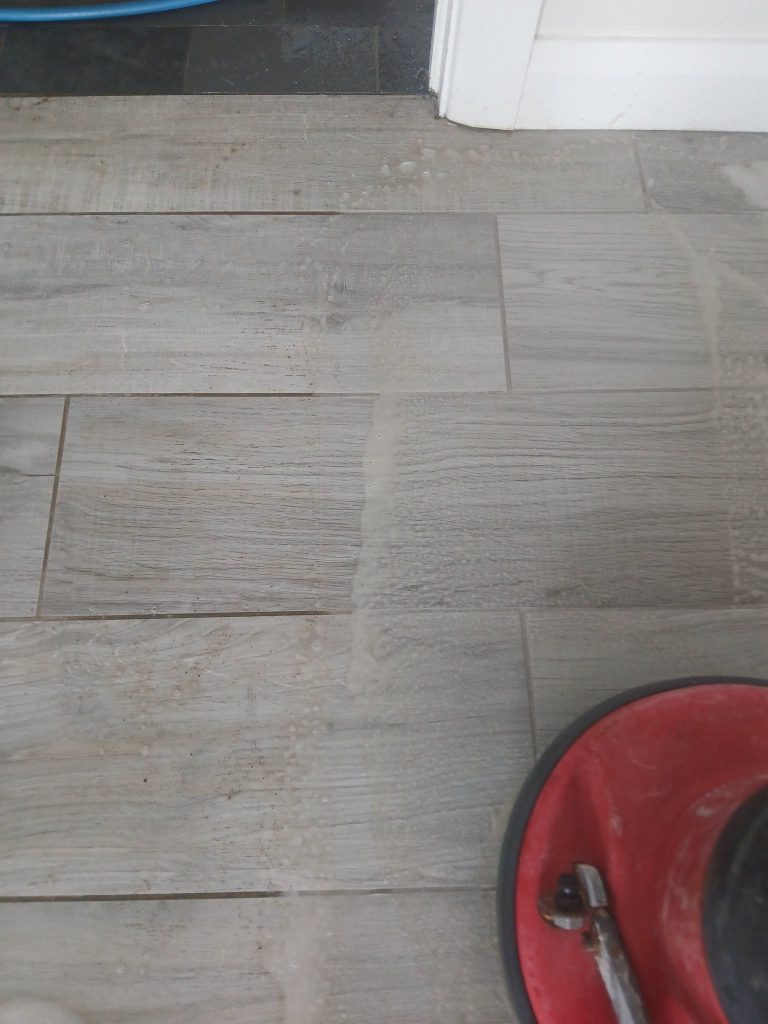
Where suitable, the work can include pre-treatment, machine cleaning and removing the dirty water, followed by drying with air movers. Grout sealing may be an option if the surface is suitable. We use products that are safe for children and pets, and explain the expected result before we start.
We’re a family-run, Pembrokeshire-based business. Paul does every job himself and brings more than eight years’ experience, training with Solutions World of Clean, Stone Care Direct and Sharps Training Solutions, plus Pesticide Control training. We’ve completed hundreds of jobs and have more than 50 five-star Google reviews.
We’re fully insured, including Public Liability and Treatment Risk cover. In plain terms, that means our insurance includes cover relating to accidental damage during treatment as well as general liability. There’s a minimum charge of £80, with free no-obligation quotes, no hidden costs and no upselling.

Cleaning solution and professional equipment working on a tiled floor.
Frequently asked questions
Can I use bleach on porcelain tiles?
Check the tile and grout manufacturer’s advice and the cleaner’s label. Bleach may be unsuitable for grout, sealants or nearby materials, so it isn’t the best choice for routine floor cleaning. Never mix bleach with other cleaners.
Why do my tiles look worse after mopping?
The mop may be spreading dirty water, or too much cleaner may be leaving a film behind. Try a smaller amount of suitable cleaner, change the water often, rinse with clean water and dry polished tiles with a clean microfibre cloth.
Can porcelain tiles be sealed?
Many porcelain tiles don’t need sealing, but grout may benefit from it. Suitability depends on the tile finish, grout and any existing treatment, so check the manufacturer’s guidance before applying a sealer.
How often should porcelain tiles be cleaned?
Sweep or vacuum as needed to keep grit off the floor, and mop when it’s visibly dirty. Kitchens, busy hallways and homes with sandy feet or muddy paws may need more frequent attention than lightly used rooms.
For more about our tile and grout cleaning in Pembrokeshire or hard floor cleaning and restoration, get in touch for a free, no-obligation quote. Call Paul on 07824 536685 or 01646 824016, or use our contact form. We cover Pembroke, Pembroke Dock, Haverfordwest, Milford Haven, Tenby, Saundersfoot, Narberth, Fishguard, Kilgetty, Newport, Carmarthen and across Pembrokeshire.