 Skip to content

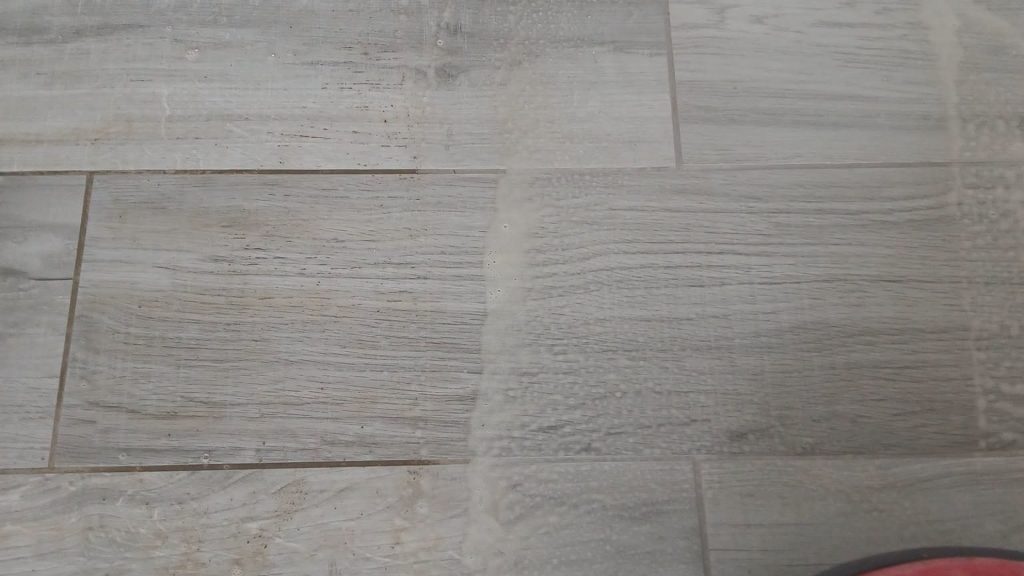
A tiled floor with the grout lines cleaned and restored.
Grout is porous, so dirt can settle into it rather than sitting on the surface. The reliable way to clean it is to use a cleaner suitable for the grout and tile, let it dwell as directed, agitate with a stiff grout brush, then rinse thoroughly and dry. Simply mopping over the lines can leave the soil behind, or spread dirty water across the floor.
If the grout in your kitchen or bathroom has turned grey, it’s tempting to reach for the strongest cleaner under the sink. But the wrong product can damage grout or nearby tiles, and some methods create plenty of scrubbing without much improvement. Here’s how to clean grout more sensibly, and how to tell when it may need more than a DIY clean.
What is grout and why does it go dark?
Most traditional grout is cement-based. It has tiny pores that can absorb soil, grease and dirty mop water. Over time, that can leave the lines between tiles looking darker than the tiles themselves. In bathrooms, dark marks may also be mould or mildew, particularly where moisture lingers.
A protective sealer can reduce how readily cement grout absorbs stains, but it doesn’t make grout dirt-proof. Once the sealer wears away, or if the grout was never sealed, soil can settle in more easily. Epoxy grout is less porous and doesn’t usually need sealing.
How to clean grout: step by step
Before starting, check the cleaner’s label, ventilate the room and wear gloves if the product instructions recommend them. Test your method on a small, inconspicuous area first. If you’re unsure what the tile is made from, take care: natural stone needs different treatment from ceramic or porcelain.
- Identify the grout and tile. Cement-based grout is common; epoxy grout is another type. Natural stone such as limestone, marble and travertine is sensitive to acids. If you can’t identify the surface, check with the installer or ask a professional before using a strong cleaner.
- Remove loose dirt. Dry-brush or vacuum the floor first. This helps prevent grit from turning into muddy residue when you add cleaner.
- Choose a suitable cleaner. For general soil and grease on compatible ceramic or porcelain, a tile-safe alkaline cleaner may help. For natural stone, use a product specifically suitable for that stone; a pH-neutral cleaner is often the safer choice.
- Apply and let it dwell. Follow the label for dilution and dwell time. Give the cleaner time to work rather than scrubbing immediately, but don’t let it dry on the surface.
- Agitate the grout. Use a stiff nylon grout brush or suitable brush head, working along the lines. Avoid a wire brush or anything likely to scratch the tile or wear away the grout.
- Rinse and remove the dirty water. Follow the product directions and lift away the loosened soil with clean water and a cloth, mop or extraction tool. A mop over dirty water can just move it around.
- Dry the floor. Use a clean towel or allow it to dry with good ventilation. Drying helps you see the result clearly and prevents dampness lingering in the grout.
- Seal cement-based grout if suitable. Only consider sealing once the grout is thoroughly clean and completely dry. Follow the sealer’s instructions. Don’t seal over dirt; epoxy grout generally doesn’t need sealing.

An air mover drying a tiled floor after cleaning.
What actually works, and what doesn’t?
A grout brush, an appropriate cleaner and thorough rinsing are the useful basics. For a small, lightly soiled patch, a mild bicarbonate-of-soda paste may help, but rinse it away carefully and test first. A vigorous scrub with the wrong cleaner is not a shortcut.
White vinegar is acidic. Repeated use can wear cement-based grout, and it can etch or dull acid-sensitive natural stone such as marble and limestone. The same caution applies to other acidic products, including some limescale removers. Don’t use them on natural stone or as routine grout cleaners.
Bleach may lighten mould staining, but it doesn’t remove embedded soil. It can affect coloured grout and some sealers, especially with repeated use, so check the product label and test an inconspicuous spot. Never mix bleach with vinegar, acids, ammonia or other cleaning products; dangerous fumes can result.
Steam may help on some sound, suitable grout, but it isn’t right for every floor. Avoid it on cracked or loose grout, and check whether the tile and grout manufacturer permits it. “No-scrub” products can be convenient for light dirt, but are unlikely to lift years of embedded soil on their own.
Why does my grout come back dirty so quickly?
A few everyday habits can make clean grout look grubby again:
- The sealer is missing or worn, so cement grout absorbs soil more readily.
- Mopping with dirty water pushes grime into the lines.
- Too much detergent can leave a film that attracts dirt.
- Doorways and busy walkways collect grit, particularly in wet weather.
- Kitchen grease and bathroom soap scum build up around the joints.
Vacuum or sweep before mopping, use the floor cleaner at the recommended dilution, and change the water when it gets dirty. These small steps can help keep the lines looking cleaner between deeper cleans.
Should I seal my grout?
Sealing is usually worth considering for clean, dry cement-based grout, especially in busy kitchens, bathrooms and entrances. It slows the absorption of spills and soil, making the grout easier to maintain. It isn’t a permanent barrier, though, and will eventually need renewing according to the product instructions and how much the floor is used.
Sealer won’t clean dirty grout or repair damaged joints. Cleaning and drying need to come first. Epoxy grout is generally non-porous and doesn’t usually need a sealer.
When is it worth getting a professional in?
If the grout still looks dark after careful cleaning, the soil may be too deep for ordinary household methods. A professional clean can also be useful for large floors, delicate stone, recurring mould, a holiday let with a changeover deadline, or when you want grout sealing applied after a suitable clean.
Pembrokeshire Carpet Cleaners is a family-run, Pembrokeshire-based business with more than eight years’ experience and hundreds of jobs completed. Paul does every job himself, and has training with Solutions World of Clean, Stone Care Direct and Sharps Training Solutions, as well as Pesticide Control training. He has extensive product knowledge for tile and stone.
We offer a free sample patch with every hard floor quote. We’ll clean a small area so you can see how the floor responds before deciding whether to go ahead.

A free sample patch cleaned into a grubby riven slate floor.
How do we clean tile and grout?
We first assess the tile and grout, then choose a suitable pre-treatment and cleaning method for the surface. We machine-clean and extract the dirty water rather than simply spreading it across the floor, then dry the area. Where appropriate, we can also apply grout sealer or an antimicrobial treatment for mould and mildew.
We clean suitable ceramic and porcelain, natural stone including slate, limestone, travertine and marble, terracotta and terrazzo, as well as shower walls, kitchen floors, splashbacks and commercial tiled areas. Our products are safe for children and pets when used as directed, and we carry both Public Liability and Treatment Risk insurance. In plain terms, that means we have cover for our work and for certain accidental treatment-related damage, as well as general liability.

Cleaning solution and professional equipment working on a tiled floor.
Find out more about our tile and grout cleaning in Pembrokeshire or our hard floor cleaning and restoration.
Frequently asked questions
Can I use bleach on grout?
Bleach can lighten some mould stains, but it won’t lift ingrained soil and may affect coloured grout or sealer. Follow the label, test first, ventilate the room and never mix it with other cleaners.
How often should grout be cleaned?
It depends on how busy the floor is and what gets tracked onto it. Sweep or vacuum regularly, then mop with a suitable cleaner. Clean grout more thoroughly when you notice a build-up that routine care no longer shifts.
Will cleaning damage my grout?
It shouldn’t when the method and product are suited to the tile and grout, but harsh acids, unsuitable tools and aggressive scrubbing can cause damage. Test a small area first, and get advice if you have natural stone or fragile grout.
Can you clean grout without removing the tiles?
Yes. Tile and grout cleaning works on the grout lines in place; the tiles don’t need to be removed.
Want to see what a clean patch could do?
We offer free, no-obligation quotes with a minimum charge of £80, no upselling and no hidden costs. Paul serves Pembroke, Pembroke Dock, Haverfordwest, Milford Haven, Tenby, Saundersfoot, Narberth, Fishguard, Kilgetty, Newport, Carmarthen and across Pembrokeshire. Call or WhatsApp 07824 536685 or 01646 824016, or use our contact form.
We also clean carpets, upholstery and rugs, and provide hard floor restoration.